The Myth of the One-Size-Fits-All Dress Code
A dress code leaves room for context. Learn how to read the occasion, setting and formality so you can choose an outfit that feels appropriate.
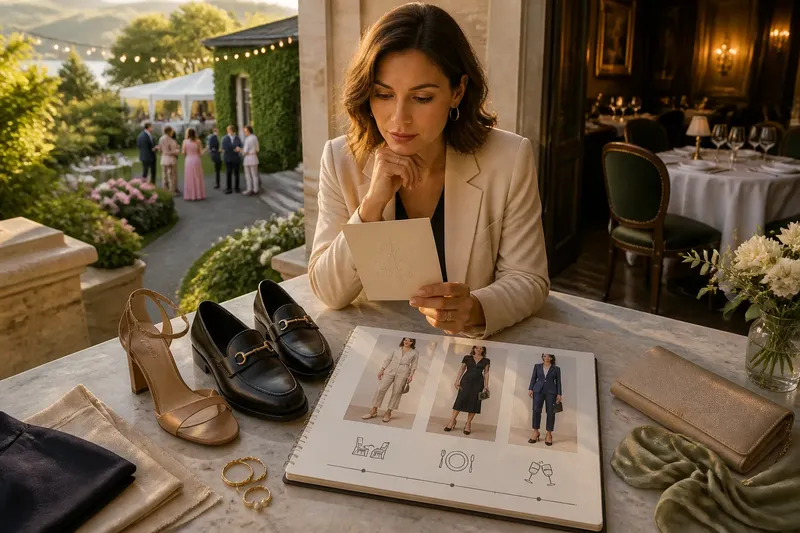
Dress codes make more sense when you read them alongside the invitation, venue and purpose of the gathering. “Smart casual” at a garden reception may suggest something quite different from “smart casual” at a restaurant opening, even though the phrase is identical.
That gap is not necessarily a flaw. Dress-code words are shorthand: they point towards a shared level of formality, but rarely prescribe one exact outfit. You can make a confident choice by looking for the clues around the phrase, then deciding how formal the event is likely to feel in practice.
Why does the same dress code mean different things?
A dress code is interpreted through the people, place and activity it describes. A daytime ceremony, a gallery evening and a work dinner can all invite polished clothes while calling for different fabrics, shoes and degrees of ornament.
The host may also use familiar terms loosely. One person’s “cocktail attire” could mean a suit and a knee-length dress; another may picture eveningwear with more shine. Treat the wording as a starting point, not a private code you are expected to guess perfectly.
Consider what the clothes need to do. A long walk across grass, a seated meal, dancing or a formal presentation can all affect whether a particular outfit feels suitable, even if the dress-code label stays the same.
How should I read the occasion?
Start with the event’s purpose and time of day. A daytime wedding, an evening awards dinner and a casual birthday gathering carry different expectations before you even consider the venue.
Look for details in the invitation: “ceremony”, “reception”, “dinner” and “drinks” suggest different rhythms. A ceremony followed by a meal may call for clothes that feel polished for both, while a drinks reception can allow a little more ease of movement.
Timing offers a clue rather than a rule. An evening start often points towards a more dressed-up mood, but a relaxed outdoor gathering can remain informal after dark. Read time together with the event’s purpose instead of treating it as a firm dress instruction.
What does the setting tell me?
The venue helps you picture how the outfit will sit in its surroundings. A grand hotel, a village hall, a beachside restaurant and a private home each have a different atmosphere, and practical details such as stairs, gravel or a garden path matter too.
Use the venue’s own description, photographs or map to get a sense of the space. If the invitation names a restaurant, its website can show whether the room is intimate and relaxed or designed for formal dining. That is a useful visual clue, not a demand to copy what you see there.
Think about comfort in relation to the setting. Shoes that work on a smooth floor may be awkward on grass, while a delicate outfit can feel out of place if the plan includes an informal outdoor activity. You need not dress down entirely; a stable shoe or a layer you can remove may be enough to make the outfit work.
How can I judge the level of formality?
Formality is easier to judge when you compare the expected polish of the outfit rather than searching for a single approved garment. A crisp shirt, tailored trousers, a structured dress or a well-finished jacket can all look considered; their effect changes with cut, fabric, footwear and accessories.
Ask how much ceremony the gathering seems to call for. A formal invitation, a carefully chosen venue and a planned seated meal may point towards sharper tailoring and dressier shoes. A casual invitation to a familiar setting may favour relaxed shapes and simpler accessories, even if the host has asked guests to look smart.
Colour and decoration are supporting clues, not fixed rules. Darker shades, polished shoes and restrained accessories can create a more formal impression; lighter colours, softer textures and minimal structure often read as relaxed. The full combination matters more than any one item.
What should I wear when the wording is vague?
Choose an outfit that sits comfortably within the likely range of formality, then adjust one element to suit the setting. If you are between casual and dressy, a neat base with one more formal piece is often easier to adapt than a highly specific look.
Imagine you are invited to an evening birthday dinner with “smart casual” on the invitation, but no further detail. You could begin with tailored trousers and a simple shirt, then choose clean leather loafers and a jacket if the restaurant looks polished; if the venue is a relaxed neighbourhood place, leave off the jacket. The starting point stays appropriate to the invitation, while the final choice responds to the room.
When uncertainty could affect the whole outfit, ask the host a brief, practical question. “Would you say jackets are expected?” or “Is this more garden-party or dinner-dressy?” gives them an easy way to clarify without asking them to define every guest’s clothes.
Should I follow the dress code exactly?
Follow the intention rather than treating every word as a uniform. If the invitation says “black tie”, aim for formal eveningwear; if it says “festive”, it may be signalling colour or a celebratory mood rather than a specific garment.
When a dress code is precise, take it seriously and check what the host means if a term is unfamiliar. For a broad phrase such as “polished” or “dressy”, use the occasion and venue to guide your interpretation. If the invitation includes an explicit request, such as covered shoulders for a ceremony, give that instruction priority.
Your outfit can also reflect your own comfort and style while respecting the event. A tailored jumpsuit, a suit in a softer colour or a dress with understated jewellery may all feel personal without shifting the overall level of formality.
What questions should I ask before choosing an outfit?
Can I ask the host what the dress code means?
Yes. A concise question about one practical detail is usually more useful than asking the host to choose your outfit. Ask early enough for the answer to help, and keep the wording easy to reply to.
What if the invitation gives no dress code?
Use the occasion, venue and time to estimate the expected polish, then choose an outfit that feels appropriate without being conspicuous. If you know someone else attending, you can ask what they understand the gathering to be like.
How do I avoid being overdressed or underdressed?
Look for the level of effort signalled by the invitation and setting, and avoid pushing every element to its most formal or most casual extreme. A neat, adaptable outfit is a sensible middle ground when details are limited.
What if I need a particular accommodation?
Prioritise clothes that let you participate comfortably, then adapt the formality through details such as a jacket, shoes or accessories. If you need clarification about an event requirement, ask the host rather than assuming you must manage it alone.
How can I make a final choice?
Before you get dressed, run through the same three clues: what the event is for, what the setting is like and how formal the invitation feels. Then check that your outfit suits the activities, feels comfortable to wear and respects any specific request.
The most useful dress-code reading is not a hunt for a perfect outfit hidden in a phrase. It is a way to make a thoughtful choice from the information you have. With the occasion, setting and level of formality in view, even a broad dress code can point you towards clothes that feel at ease in the room.