Cotton, Linen, or Wool: Read the Fabric Before the Label
Compare cotton, linen and wool by touch, drape and everyday behaviour so you can choose a garment for the way you actually dress.
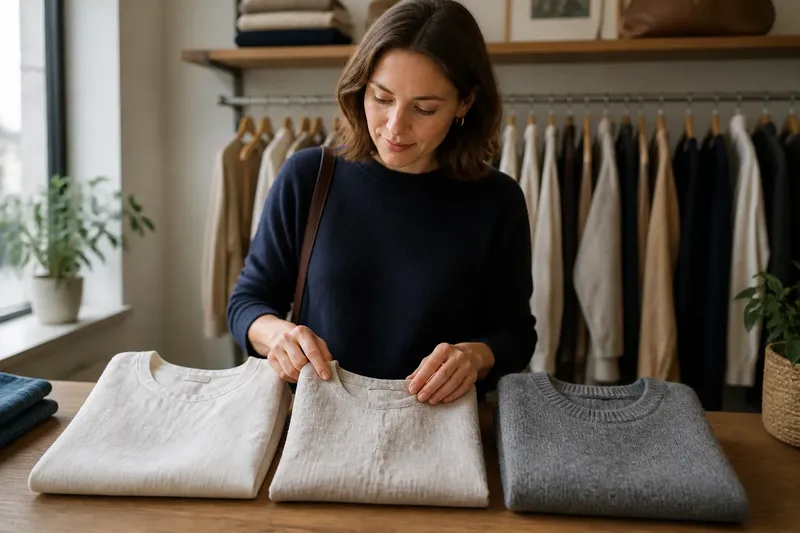
A cotton, linen or wool label tells you the fibre name, but the cloth itself tells you how a garment may feel and behave. Before choosing a shirt, dress or jumper, look at its surface, weight and movement as well as the composition tag.
Imagine you are choosing a layer for a day that begins in a cool office and ends with a walk home. You have found three similar-looking tops: one cotton, one linen and one wool. This invented situation gives you a useful way to compare them—not by treating any fibre as automatically best, but by asking what each one is likely to do in your wardrobe.
Start by asking what the garment needs to do
Begin with the job, not the fibre’s reputation. A fabric that feels pleasant in the changing room may still be wrong for the way you move, the layers you wear or the care you are willing to give it.
For the imagined walk, you might want a top that is comfortable against the skin, easy to layer and not too fussy between wears. Those needs already point towards practical questions: Does the cloth feel crisp or soft? Does it spring back after being handled? Does it have enough drape to sit comfortably under a coat?
These are clues, not promises. Weave, yarn, finishing and garment cut all affect the result, so two pieces labelled with the same fibre can feel quite different.
Read the cloth with your hands and eyes
First, inspect the surface in good light. Cotton can be smooth, brushed, crisp or textured; linen often shows irregular slubs and a dry, slightly grainy character; wool may look softly fuzzy, compact or visibly textured. A close, even surface is not automatically better than an irregular one: notice which appearance suits the garment and how much texture you enjoy wearing.
Next, hold a section of fabric and let it fall. Does it hang in soft folds, keep a crisp shape or seem to resist movement? A light cotton poplin, for instance, may hold a shirt collar neatly, while a cotton jersey can stretch and cling more. Linen can range from airy and fluid to firm and board-like. Wool can be fine and supple or dense and springy.
Gently pinch and release a discreet section. Watch whether the crease relaxes quickly or remains visible. Linen commonly develops pronounced creases; cotton varies, with some weaves staying neat and others rumpling readily; wool often recovers its shape well, though the result depends on the cloth. This small observation helps you decide whether natural creasing will feel like part of the garment’s character or a nuisance.
Finally, try the garment on and move as you normally would. Reach forward, sit down and let your arms rest at your sides. Check whether the fabric pulls, rubs or feels clammy, and whether its weight works with the cut. The label cannot tell you where a sleeve seam will sit or how a neckline will feel.
Cotton suits familiar, easy-going routines
Cotton is a versatile fibre with a broad range of textures and constructions. In everyday clothing, you may meet it as crisp poplin, sturdy denim, soft jersey, fine lawn or brushed flannel. These fabrics do not behave alike, so “cotton” is a starting point rather than a complete description.
For the imagined top, cotton might suit you if you value a familiar hand and want a fabric available in both structured and relaxed forms. A woven cotton shirt may feel neat and substantial, while a jersey top may stretch with movement. Notice whether the cloth feels smooth enough against your skin and whether its thickness works for the layers you expect to wear.
Cotton can absorb moisture, but how comfortable it feels as the day changes depends on the fabric’s weight, weave and fit. A close-fitting, heavier garment may feel different from a loose, light one. If the top will be worn under another layer, check that the sleeves and body do not bunch awkwardly.
Linen brings a dry touch and visible creasing
Linen is made from flax fibres and is often recognisable by its dry hand, natural texture and tendency to crease. Those creases are not necessarily defects: they are part of the look many people seek in linen shirts, trousers and dresses.
In the imagined choice, linen could be appealing if you like a light, airy feel and are comfortable with a relaxed surface as the day goes on. But linen is not always feather-light or loose. A heavier linen cloth can feel firm, and a tightly woven garment may have a more defined shape than its fibre name suggests.
Check how the garment moves at the shoulders and waist, and look at the areas likely to crease first, such as elbows or the front of a skirt. If visible rumpling would distract you, a different cloth—or a linen blend—may better match your preferences. Blends change the fabric’s character, so judge the finished garment rather than assuming the fibres simply average out.
Wool offers spring and warmth in many forms
Wool can feel springy, soft, dry, smooth or slightly textured, depending on the fibre, yarn and finish. It appears in fine knitwear, woven trousers, suiting and heavier outer layers. A wool label does not tell you by itself whether a garment will feel light or bulky.
For the imagined walk, wool might make sense if you want a layer with some resilience and warmth. Gently handle the cloth and see whether it returns towards its original shape; then check the inside against your skin, especially around the neck and cuffs. If you are sensitive to a scratchy feel, do not rely on the word “soft” on a sales tag—try the garment on or inspect the fabric where it will touch you.
Wool can retain warmth and often has a natural spring, but a thick knit may be too warm indoors, while a fine wool top may work comfortably as a light layer. Think about the setting as well as the fibre. A garment intended for long indoor wear may need to feel different from one worn mainly outdoors.
Which fibre fits your everyday preferences?
Which fabric is best if I dislike creases?
Start by comparing the actual cloth, since cotton and wool both vary widely and linen tends to show creases more clearly. Pinch and release a section, then consider whether any remaining folds would bother you during ordinary wear.
Which fabric feels coolest against the skin?
Fibre alone cannot settle that question: thickness, weave, fit and the weather all matter. Try the garment on, notice whether it feels airy or close, and think about whether you will wear it alone or beneath another layer.
Can cotton, linen and wool all be worn year-round?
Each can appear in garments suited to different conditions, but the cloth and styling matter more than a fibre name in isolation. Fine wool, light cotton and airy linen may serve different roles from dense knits, heavy denim or tightly woven linen.
What should I check on the care label?
Look for the care symbols and written instructions, along with the fibre composition. Follow the garment maker’s directions, since construction and finishing can affect how a particular piece should be cleaned and dried.
Make the final choice from the garment, not the promise
Return to the invented walk-to-work situation. Suppose the cotton top feels comfortable but its thick body bunches beneath your coat; the linen one moves freely but its creases are more visible than you want; and the wool top feels springy, sits smoothly under the coat and is pleasant at the neck. In that imagined case, wool looks like the best match for the stated preferences—not because wool is universally superior, but because its observable qualities suit this wearer’s plans.
A different starting point could lead to a different choice. Someone who likes a crisp shirt might favour cotton, while someone who welcomes relaxed creasing might choose linen. The useful lesson is to name the qualities you want before looking at the composition tag, then check whether the garment in front of you actually offers them.
When you shop for cotton, linen or wool, use the fibre name as one clue among several. Feel the surface, watch the drape, notice what happens when you release a pinch of cloth, and test the fit with ordinary movement. That quick, attentive reading can help you choose a garment for the way you dress rather than for the story its label seems to tell.